Push, pull, legs: the split explained, with a 3-day and a 6-day template
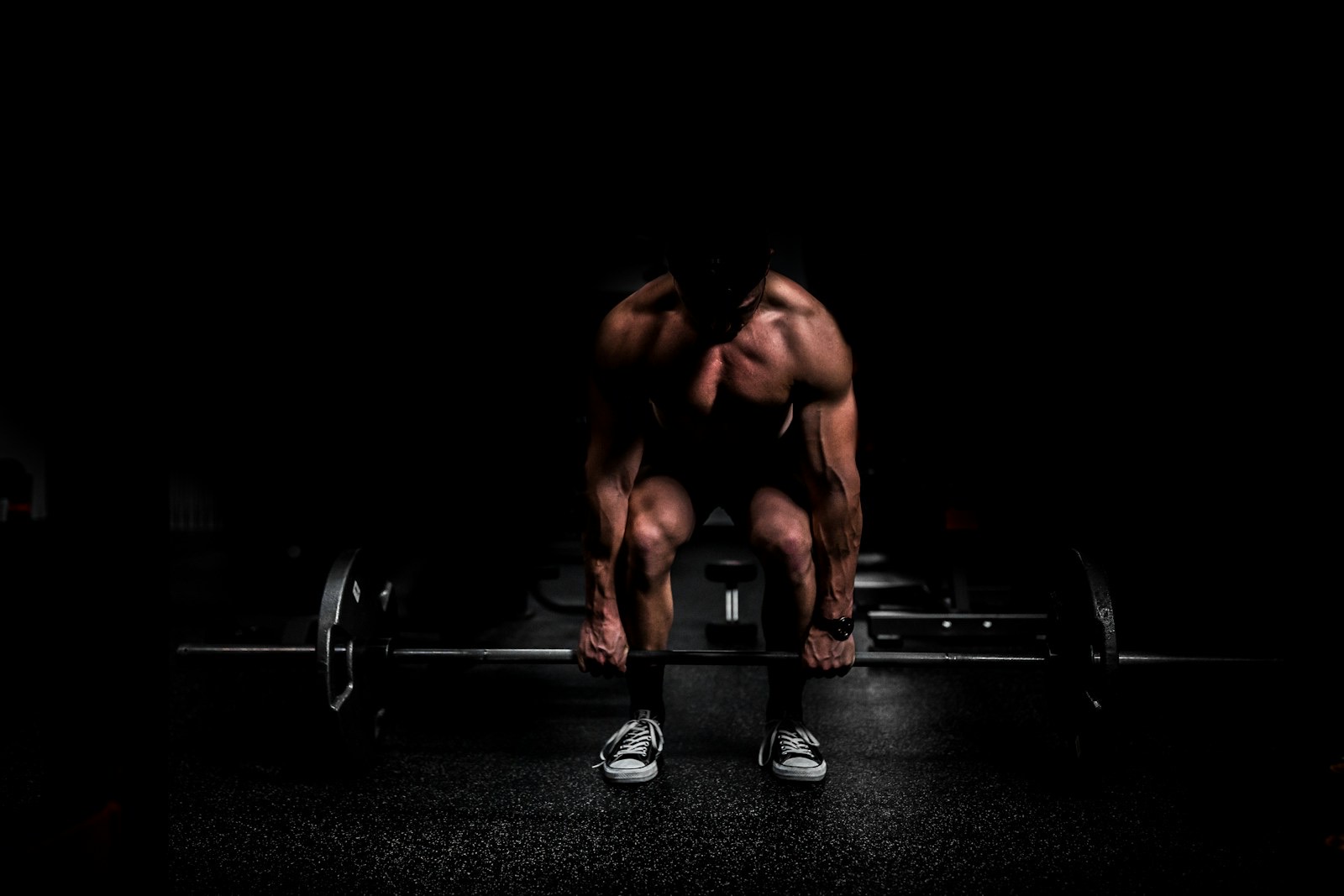
Push, pull, legs (PPL) splits your training into three kinds of session. Push covers chest, shoulders and triceps. Pull covers back, biceps and rear delts. Legs covers quads, hamstrings, glutes and calves. Run each once a week for a 3-day plan, or twice for a 6-day plan.
The idea is grouping by movement, so the muscles that work together train together and are rested together. Below are what goes on each day, two templates, and how to progress them.
What goes in each day
Push. Pressing movements. Chest, front and side delts, triceps.
- A horizontal press: barbell or dumbbell bench press.
- A vertical press: overhead press.
- A chest accessory: incline press or fly.
- A side delt raise.
- A triceps extension.
Pull. Pulling movements. Lats, upper back, biceps, rear delts.
- A vertical pull: pull-up or lat pulldown.
- A horizontal pull: barbell, cable or dumbbell row.
- A rear delt movement: reverse fly or face pull.
- A biceps curl.
Legs. Everything below the waist.
- A squat pattern: squat or leg press.
- A hinge: Romanian deadlift or deadlift.
- A single-leg movement: lunge or split squat.
- A hamstring curl.
- A calf raise.
A good day has 4 to 6 exercises of 3 to 4 sets each. That is about 15 to 20 sets, and takes 50 to 75 minutes with proper rest. See rest between sets for how long to wait.
Template one: three days a week
One of each, spaced across the week. Monday, Wednesday and Friday is the usual pattern. Each muscle is trained once a week, so each session needs enough sets to count.
| Day | Exercise | Sets × reps |
|---|---|---|
| Push | Bench press | 4 × 6 to 8 |
| Push | Overhead press | 3 × 8 to 10 |
| Push | Incline dumbbell press | 3 × 8 to 12 |
| Push | Lateral raise | 3 × 12 to 15 |
| Push | Triceps pushdown | 3 × 10 to 12 |
| Pull | Pull-up or pulldown | 4 × 6 to 10 |
| Pull | Barbell row | 4 × 6 to 8 |
| Pull | Seated cable row | 3 × 10 to 12 |
| Pull | Face pull | 3 × 12 to 15 |
| Pull | Dumbbell curl | 3 × 10 to 12 |
| Legs | Squat | 4 × 5 to 8 |
| Legs | Romanian deadlift | 3 × 8 to 10 |
| Legs | Walking lunge | 3 × 10 per leg |
| Legs | Leg curl | 3 × 10 to 12 |
| Legs | Standing calf raise | 3 × 12 to 15 |
This gives roughly 10 to 14 hard sets per muscle per week, which sits in the usual range. See sets per week for how to count them.
Template two: six days a week
Each session twice, with one heavier and one lighter version. The heavy day uses lower reps and longer rests on the main lift. The light day uses higher reps and different exercises where useful. Run it as Push A, Pull A, Legs A, Push B, Pull B, Legs B, with one rest day.
| Day | Main lifts | Accessories |
|---|---|---|
| Push A (heavy) | Bench press 4 × 5; overhead press 3 × 6 | Incline press 3 × 8; triceps extension 3 × 10 |
| Pull A (heavy) | Weighted pull-up 4 × 5; barbell row 4 × 6 | Face pull 3 × 12; curl 3 × 8 |
| Legs A (heavy) | Squat 4 × 5; Romanian deadlift 3 × 6 | Leg curl 3 × 10; calf raise 3 × 10 |
| Push B (light) | Incline dumbbell press 3 × 10; dumbbell shoulder press 3 × 10 | Cable fly 3 × 12; lateral raise 4 × 15 |
| Pull B (light) | Lat pulldown 3 × 10; chest-supported row 3 × 10 | Reverse fly 3 × 15; hammer curl 3 × 12 |
| Legs B (light) | Leg press 3 × 10; split squat 3 × 10 per leg | Hamstring curl 3 × 12; calf raise 4 × 15 |
This reaches about 12 to 18 sets per muscle per week, spread over two sessions. Spreading sets over two days a week is generally better than putting all of them into one. The cost is time: six sessions is a commitment, and recovery becomes the limit before motivation does.
How to progress week to week
Keep it simple. On each lift, work in a rep range and add load only when you have earned it.
- Pick a rep range for the lift, for example 6 to 8.
- Start with a weight you can do for the bottom of the range with 2 reps in reserve.
- Next session, aim for one more rep on each set.
- When every set reaches the top of the range, add the smallest load you can and begin again at the bottom.
This is double progression, covered in progressive overload. On the 6-day plan, progress the heavy day by load and the light day by reps. If two lifts in a row stall, lower the load by about 10% and rebuild. Take an easy week every 6 to 8 weeks if joints or sleep complain.
Who it suits, and who should run full body
PPL suits lifters who have at least 6 to 12 months of consistent training, can attend three or six days a week, and enjoy variety. It makes sense when you want to train a muscle with more volume in one session than a full-body plan allows.
If you are new, or you can only train two or three days a week and cannot predict which days, a full-body plan is a better start. It trains every pattern three times a week, so you practise the main lifts more often. See the beginner gym plan.
In GymYuz
You can build a push, pull and legs routine and schedule it per weekday, so Monday opens on push without searching. There are also ready-made plans if you would rather start from a template. The body map lets you pick a session by muscle and see what you have trained recently.
Join the waitlist on the home page to get the app when it opens.